What Should Go on a Contractor Service Page?
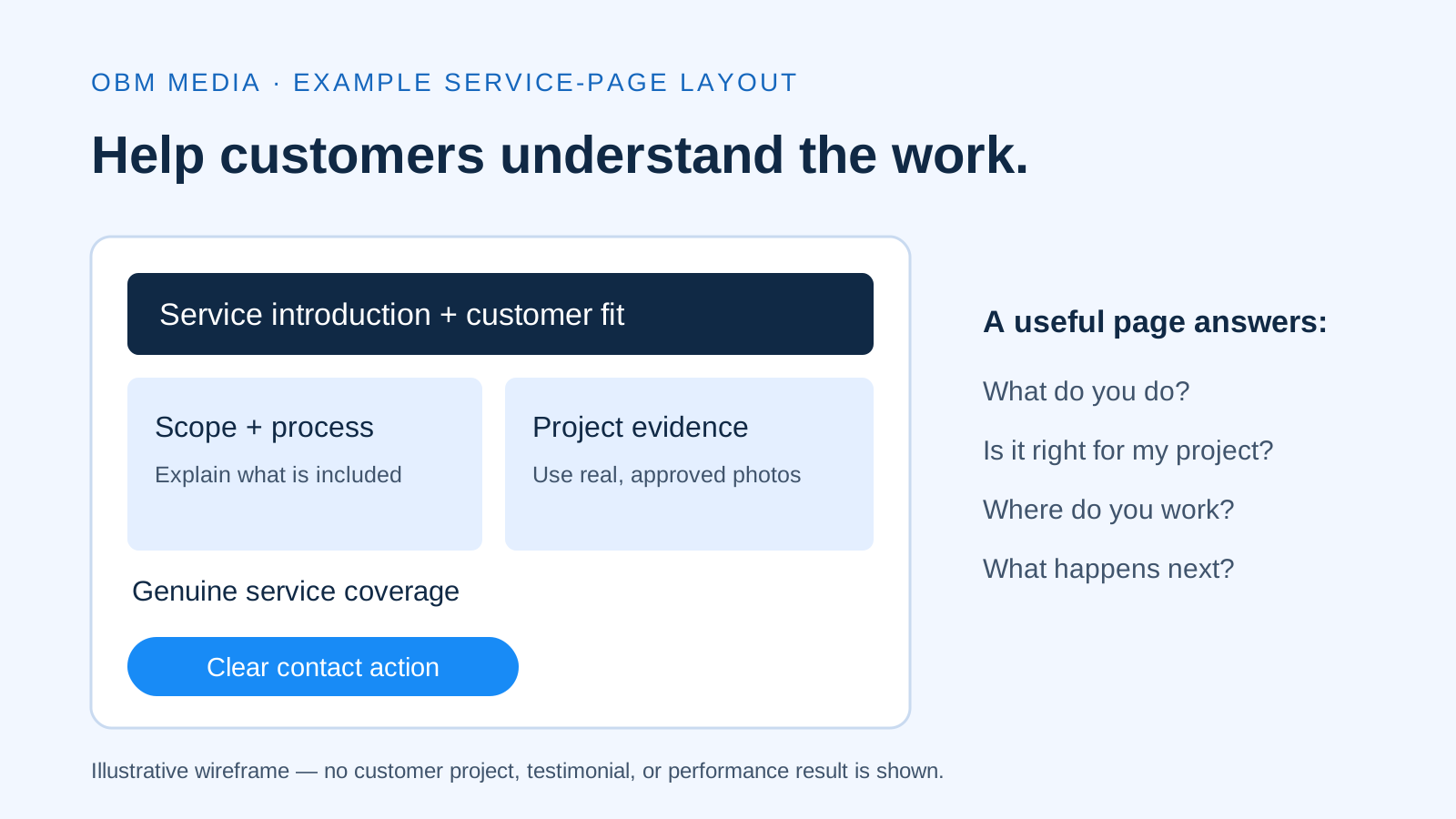
A contractor service page should explain the work you offer, who it is suitable for, where you provide it, and how a customer can take the next step. Support that explanation with real project evidence and a clear account of your process. Someone arriving from search should be able to understand the service without returning to your homepage for basic information.
That gives the page a different job from a general introduction to your company. A homeowner looking into a specific project needs enough detail to decide whether a conversation makes sense. Here is how to organize that information into a useful page.
Start with the service and the customer’s situation
Use a heading that names the work in familiar language. Follow it with a short explanation of the project types you handle and the area you serve. Avoid opening with a slogan that could belong to any contractor.
For example, a garage floor coating page could explain whether the company works on existing residential concrete and how the evaluation process begins. A roof replacement page would need different information. Write for the decision in front of that customer, rather than filling every service page with the same company description.
Be specific about fit without making promises you cannot support. If some surfaces, property types, or project sizes need an assessment before you can accept the work, say so. Customers benefit from knowing what your team needs to check.
Explain what the work includes
Describe the main parts of the service in the order a customer will encounter them. Explain unfamiliar terms when they first appear. A visitor should not need trade knowledge to understand the difference between the service they want and a related option.
Separate standard scope from work that depends on the property. Preparation, repairs, removal, cleanup, and follow-up are worth addressing when they are relevant to the service. Only describe work that your business actually offers, and avoid presenting optional work as automatically included.
If the final scope depends on an inspection, explain what that inspection helps determine. This is more useful than publishing a fixed answer that your sales team will have to correct later.
Show relevant work and explain it
Choose project photos that help a customer understand the service. Add a brief caption explaining what the project involved and why the example is relevant. A close-up may show a finish clearly, while a wider view helps the reader understand the setting.
Use photos you have permission to publish. Keep customer details out of the page unless you have authorization to share them. If you include a testimonial, preserve the customer’s meaning and make sure the source can be verified.
A short project description can answer questions that a photo alone leaves open. Explain the original need, the agreed scope, and the documented result. Do not turn an ordinary project into an invented success story or attach an unsupported performance claim.
Describe the next steps honestly
Outline how a customer moves from inquiry to a proposed scope of work. Depending on the business, that might involve an initial conversation, a property visit, an estimate, and a scheduling discussion.
Explain what the customer should prepare for the first conversation. Photos, a project location, or a short description may be helpful, but do not demand detailed information before you need it. Only publish response times, installation timelines, or availability commitments your team can consistently honor.
Make the service area clear
Tell readers where you actually work. A straightforward service-area description helps someone decide whether to contact you. Where coverage varies by project, explain how they can confirm it.
Keep location information consistent with the rest of your website. Naming a town should reflect genuine coverage, not imply an office or completed project that does not exist.
Give the reader a clear next step
Use a call to action that accurately describes what happens next, such as “Request an estimate” or “Discuss your project.” Make the phone number and contact route easy to find, and check that both work on a phone.
Review the page as a prospective customer: Is the service clear? Can you judge whether it fits your project? Do you understand the process? Can you reach someone without searching through the site?
At OBM Media, our web design services include custom development, responsive layouts, and attention to the customer experience. If your service pages need a clearer structure, we can discuss a website that explains your work and makes inquiries straightforward.


